Conventional loans in Orlando are mortgages that are not insured or guaranteed by a government agency. Most follow the guidelines Fannie Mae and Freddie Mac set. For Central Florida buyers with solid credit, a conventional loan is often the lowest-cost way to borrow: down payments start at 3% for eligible first-time buyers and 5% for most others, and private mortgage insurance (PMI) can come off once you build equity instead of staying for the life of the loan.
Conventional Loans in Orlando: Down Payments as Low as 3%

Fannie Mae and Freddie Mac set the rules on debt-to-income ratio (DTI), reserves, property type and condo eligibility. A file that misses one of them can be denied late, sometimes after the inspection period has run, which is why those items get checked before an offer goes in.
Bruce Woodburn and the Woodburn Team work those guidelines every day from the Winter Park office as a conventional loan lender for Orlando and Central Florida buyers. Below is what it takes to qualify for conventional loans in Orlando in 2026.
Not sure whether your credit, down payment and debts fit the conventional guidelines? Set a personalized meeting with Bruce Woodburn, The Loan Arranger
Here’s a preview of what your website’s text will look like by default. You can also adjust the typography of most elements separately. Note that the Font Size setting affects all the sizes defined in “rem” units, that is, almost all areas of your site.


Conforming vs. Non-Conforming (Jumbo) Loans
With no government agency insuring the loan, qualification rests on your credit, income and down payment. These mortgages split into two categories:
- Conforming loans follow Fannie Mae and Freddie Mac guidelines and stay at or under the annual limit set by the FHFA. For 2026 the baseline limit is $832,750 on a one-unit property.
- Non-conforming (jumbo) loans start where that limit ends. In higher-priced pockets like Windermere, Winter Park and Lake Nona, a purchase can push the loan amount — not the sale price — past $832,750, which moves the file to jumbo guidelines: higher credit scores, larger down payments, and more reserves. We write jumbo financing as well; see Jumbo loans in Orlando for those guidelines.
[Embed Bruce’s Overview Video]
Conventional Loans for Condos, Second Homes and Investment Properties
Conventional financing covers more property types than any other type of home loan, which is why it is the default for anyone buying something other than a standard single-family primary residence.
- Primary residences, second homes and investment properties all qualify. FHA, VA and USDA loans are for primary residences..
- Fixed-rate or adjustable-rate. Both are available on every property type above.
- Condos require project review before the loan can close. Fannie Mae and Freddie Mac look at owner-occupancy ratios, budget and reserve funding, litigation, delinquent dues and — in Florida since 2022 — the association’s structural inspection and reserve study status. Plenty of Orlando-area condos are warrantable; the ones that are not usually fail on the association’s paperwork, not the unit. We pull the condo questionnaire early rather than at the end, because a project that will not pass is a fact worth knowing before the appraisal is ordered.
- 2–4 unit properties qualify at the higher conforming limits shown below, with the rental income from the other units often usable to help you qualify.

2026 Conforming Loan Limits in Orlando & Central Florida
For 2026, the FHFA raised the baseline conforming loan limit for a one-unit property by $26,250, to $832,750. Orange, Seminole, Osceola, and Lake counties all follow this baseline limit. The limit applies to your loan amount, not the purchase price.
| Property Units | 2026 Conforming Limit (Orlando Metro) |
|---|---|
| 1 Unit | $832,750 |
| 2 Units | $1,066,250 |
| 3 Units | $1,288,800 |
| 4 Units | $1,601,750 |
*A larger down payment can sometimes keep a higher-priced purchase under the conforming limit and out of stricter jumbo guidelines. Source: Federal Housing Finance Agency, 2026 conforming loan limits.
Conventional Loan Requirements in Orlando (2026)
Here is what underwriting looks at on conventional loans in Orlando. We underwrite to Fannie Mae and Freddie Mac guidelines as written — no added credit score, DTI or reserve requirements layered on top of the agency rules.
3% Down Conventional Loans: Three Ways to Qualify
A 20% down payment is not required to buy a home in Orlando. Three conventional options start at 3% down on a single-family primary residence:
- Fannie Mae HomeReady: For buyers earning at or under 80% of the area median income where the home is located. No first-time buyer requirement. Includes reduced mortgage insurance, and the down payment can come from gifts, grants and approved down payment assistance.
- Freddie Mac Home Possible: Freddie Mac’s version, with the same 80% income cap and no first-time buyer requirement.
- Conventional 97: Conventional 97 (HomeOne at Freddie Mac): 3% down payment with no income limit
When every buyer on the loan is a first-time buyer, one of them completes a short homebuyer education course before closing.

Conventional Mortgage vs. FHA, VA and USDA in Orlando
| Conventional | FHA | VA | USDA | |
| Best For | Buyers with solid credit and 3–5% or more to put down | Buyers with lower credit scores or higher debt ratios | Eligible veterans, service members and surviving spouses | Buyers in eligible areas outside the Orlando core |
| Minimum Down Payment | 3% for eligible first-time buyers; 5% for most others | 3.5% with a 580+ score | None for most eligible borrowers | None |
| Credit Score | Typically 620+; best pricing at 740+ | 580+ for 3.5% down | No VA-set minimum; lender standards apply | Typically 640+ |
| Mortgage Insurance | PMI under 20% down; can be removed later | Upfront and monthly premiums; monthly usually lasts the life of the loan with under 10% down | No monthly mortgage insurance; one-time funding fee unless exempt | Upfront and annual guarantee fee |
| Property Use | Primary home, second home or investment | Primary residence only | Primary residence only | Primary residence in an eligible area; household income limits apply |
All loans subject to underwriting approval. Certain restrictions apply.
Not sure which fits? Bruce Woodburn runs the numbers on more than one option before recommending any of them.
When Can You Remove PMI on a Conventional Loan?
Route 1
Request cancellation at 80%. Once the balance reaches 80% of the home’s original value (the lower of the purchase price or the appraisal at purchase), you can ask the loan servicer in writing to cancel PMI. You need a clean payment history, no second lien on the property, and — usually — evidence the value has not dropped.
Request cancellation at 80%. Once the balance reaches 80% of the home’s original value (the lower of the purchase price or the appraisal at purchase), you can ask the loan servicer in writing to cancel PMI. You need a clean payment history, no second lien on the property, and — usually — evidence the value has not dropped.
Route 2
Automatic termination at 78%. The servicer must end PMI when the balance hits 78% of original value on the original payment schedule, provided the loan is current.
Automatic termination at 78%. The servicer must end PMI when the balance hits 78% of original value on the original payment schedule, provided the loan is current.
Route 3
Cancellation based on a new appraisal. When Orlando home values rise, equity can reach 20% faster than the payment schedule alone would get it there. Fannie Mae and Freddie Mac generally allow a request based on the home’s current value once the loan is at least two years old and the balance is 75% or less of that value, or at least five years old and 80% or less. It is generally not available in the first two years unless the added equity came from substantial improvements to the home.
Cancellation based on a new appraisal. When Orlando home values rise, equity can reach 20% faster than the payment schedule alone would get it there. Fannie Mae and Freddie Mac generally allow a request based on the home’s current value once the loan is at least two years old and the balance is 75% or less of that value, or at least five years old and 80% or less. It is generally not available in the first two years unless the added equity came from substantial improvements to the home.
💡 Ask us to run the cancellation math on your loan before you pay for an appraisal. When the numbers favor it, a conventional refinance can also remove mortgage insurance, change the rate or take cash out. See refinancing in Orlando.
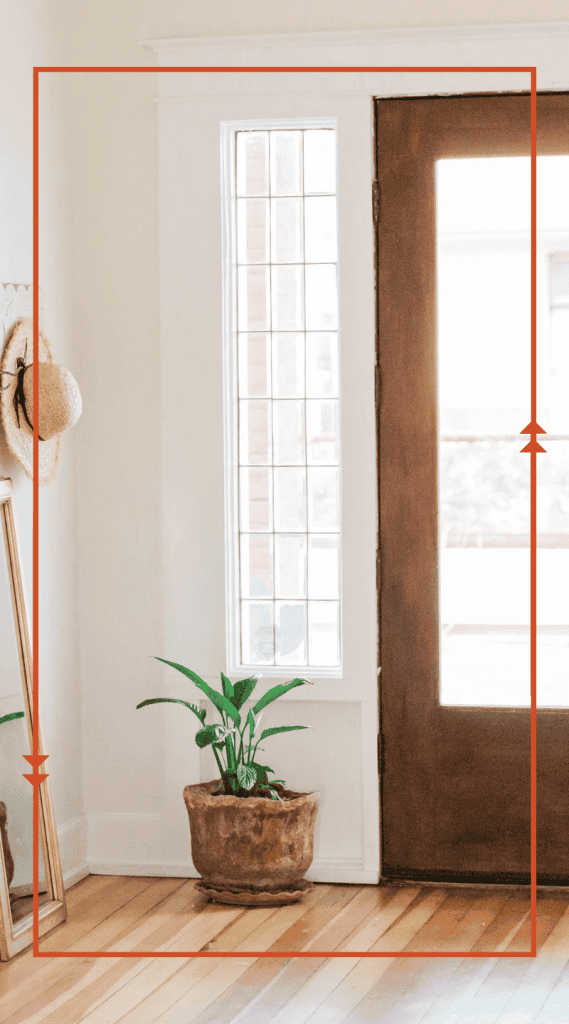
Orlando homeowners also use conventional refinancing to drop mortgage insurance outright, change the rate, or tap equity with a cash-out refinance. Explore refinancing in Orlando or ask us to run a break-even analysis.
What Affects Conventional Loan Rates in Orlando
📊 Scenario A: Primary Residence
• Credit Score: 780 or higher
• Down Payment: 20%
• Pricing Outcome: Typically the best available conventional pricing, with no PMI.
🏢 Scenario B: Rental Property
• Credit Score: 680
• Down Payment: 25%
• Pricing Outcome: A higher rate than Scenario A, because Fannie Mae and Freddie Mac add price adjustments for the lower score and for investment use.
Published conventional loan rates in Orlando are averages, and rates change daily. Your own rate depends on your credit score, down payment, property type and loan amount. Ask Bruce Woodburn and his team for a quote on your numbers, and ask about locking a rate while you shop for a home in Central Florida. These scenarios are examples, not a rate quote or a commitment to lend.
How to Qualify for a Conventional Loan in Orlando

Your application gets checked against both Fannie Mae and Freddie Mac
Fannie Mae and Freddie Mac each have their own automated underwriting system: Desktop Underwriter (DU) and Loan Product Advisor (LPA). The two do not always return the same answer on the same borrower, so an application one system turns down can be approved by the other. The Woodburn Team can run both before recommending a loan, which matters most on 3% down purchases, where the two agencies’ options differ.
Written Reviews
Common Questions About Conventional Loans in Orlando
What credit score is needed for a conventional loan in Florida?
Plan on 620 or higher. Fannie Mae removed its 620 minimum on automated approvals in November 2025, following Freddie Mac, but most approved borrowers still score above it, and with less than 20% down the PMI company sets its own minimum. A higher score lowers both the rate and the PMI premium.
Can gift funds cover the down payment on a conventional loan?
Yes. On a single-family primary residence, the entire down payment can come from a documented gift from a relative, fiancé or domestic partner. The donor signs a gift letter and the transfer must be traceable from their account to yours, so we ask for the letter before any money moves. Gift funds are not allowed on investment properties.
How long does it take to close a conventional loan in Orlando?
Eligible conventional purchases carry a written 21-day closing commitment. What moves the date is appraisal turn time, condo project review and how quickly requested documents come back. Condos that need project review and purchases using down payment assistance fall outside the commitment.
Can a seller pay closing costs on a conventional loan in Florida?
Yes, within limits. On a primary residence or second home, the seller can contribute up to 3% of the sale price with less than 10% down, 6% with 10% to just under 25% down, and 9% with 25% or more down. Investment properties are capped at 2%. Contributions can cover closing costs but not the down payment.
Can self-employed buyers get a conventional loan in Orlando?
Yes. Fannie Mae and Freddie Mac generally look for two years of self-employment, documented with two years of tax returns. One year of returns can be enough when the business is at least five years old. Income is counted after business write-offs, so buyers whose returns understate their earnings often compare bank statement loans.
How long after bankruptcy or foreclosure can you get a conventional loan?
Fannie Mae’s standard waiting periods are four years after a Chapter 7 discharge, two years after a Chapter 13 discharge, four years after a short sale or deed-in-lieu, and seven years after a foreclosure. Documented circumstances outside the borrower’s control can shorten most of them, and FHA loans have shorter waits.
CHOOSE YOUR PATH
Where Are You on Your Home Journey?
Pick your starting point and we will guide you along the right path.
Start Your Pre-Approval
Get a same-day pre-approval letter framework strategy tailored directly to your specific Central Florida purchase criteria.
Find the Right Mortgage
Whether you are shopping alternative loan types or evaluating conventional refinancing options to drop your current PMI, we can help.