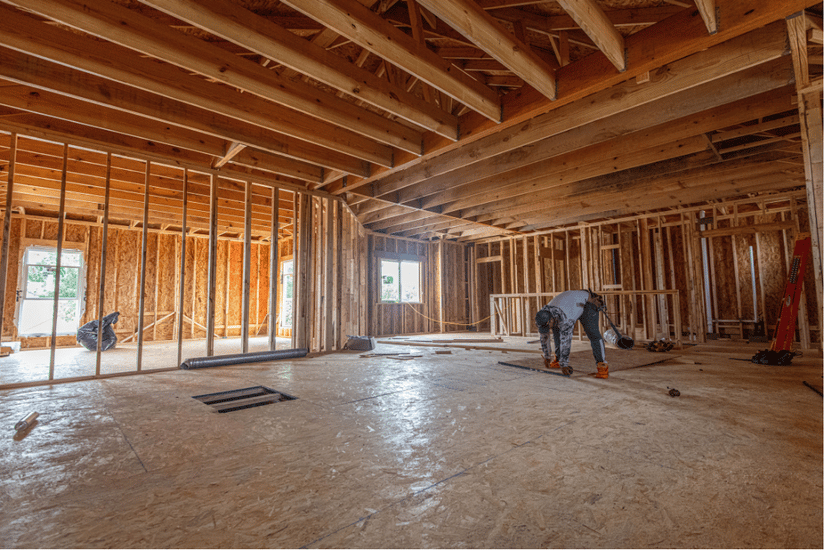
Here is what keeps people up at night when building a custom home in Central Florida: the house gets finished before the financing does. The slab is poured, the walls are up, and the borrower still has to re-qualify for a brand-new mortgage, with a new credit pull, a second set of closing costs and whatever rates the market is charging that month. Construction-to-permanent loans in Orlando remove that second approval.
Construction-to-Permanent Loans in Orlando: Build With One Loan Instead of Two
Reviewed by Bruce Woodburn, The Loan Arranger · Licensed Florida mortgage originator · NMLS #228431 · Updated
That risk comes from treating the construction loan and the permanent mortgage as two separate transactions. A single-close construction loan puts them in one:
One Closing
Papers are signed once, before ground is broken, so there is one set of closing costs and one underwriting approval instead of two.
Rate Locked Up Front
The rate is locked before ground breaks, with extended locks available to cover the build and a float-down option if market rates drop.
Low or No Payments During the Build
Payments during construction are interest-only on the funds already paid to the builder, not the full loan amount. On some loans, the interest can be built into the loan so there are no payments until the home is finished, and a VA one-time close works that way.
One Conversion, No Second Approval
When the home is finished and the certificate of occupancy is issued, the loan converts to the permanent mortgage with no second application and no second closing.
Bruce Woodburn, The Loan Arranger, and the Woodburn Team structure one-time close construction loans for custom builds across Orange, Seminole, Osceola and Lake counties, starting before the builder contract is signed. CrossCountry Mortgage’s in-house construction department manages every draw, and after any initial draw at closing, each draw is released only after the completed stage is inspected, so the builder is paid for work that is actually done.
Planning a build? Call us at 407-869-8830 before you sign a builder contract so we can structure your financing correctly from day one.

What Is a Construction-to-Permanent Loan?
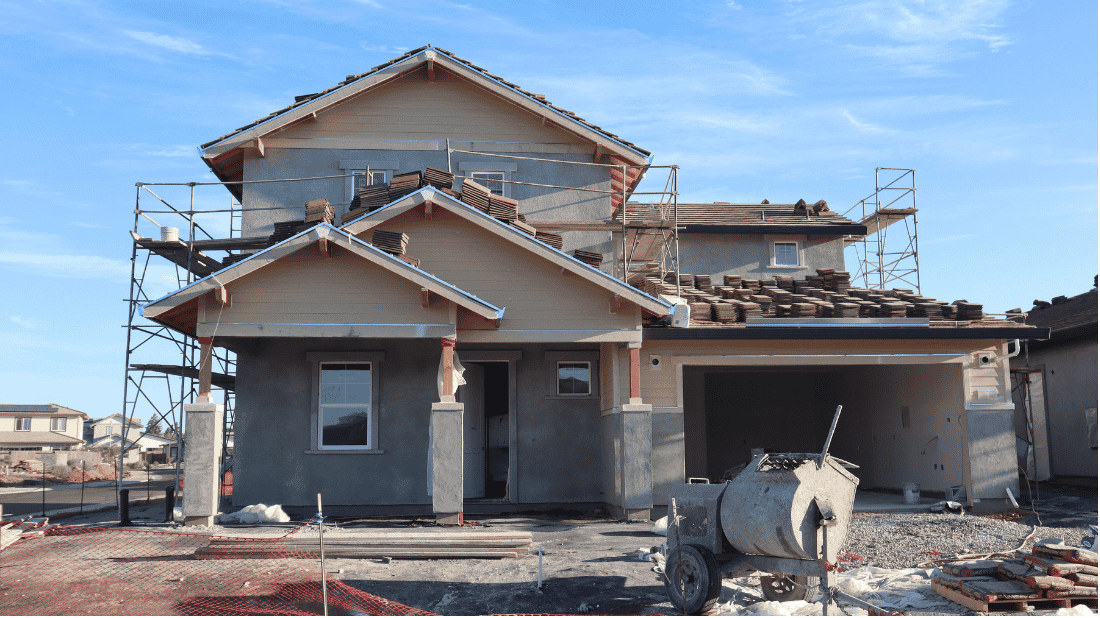
A construction-to-permanent loan, also called a one-time close or single-close construction loan, is a single loan to build a house: it finances the lot and the construction, then becomes the long-term mortgage. It closes once, before construction starts, and converts to a permanent mortgage when the home is complete and the certificate of occupancy is issued.
Two-time close
Without it, building a custom home in Central Florida can take as many as three separate loans:
- A lot loan to buy the land
- A construction loan to fund the build
- A mortgage to pay off the construction loan when the house is finished
Lenders call the construction loan plus the separate mortgage a two-time close. Each loan brings its own application, approval and closing costs, with a gap in the middle where rates can rise or an approval can fall through.
One-time close
A one-time close replaces all of that. Approval happens before construction starts, the builder is paid on a draw schedule as each stage is completed and inspected, and the permanent rate can be locked at closing instead of being set months later by whatever the market is doing.
Build the home you want, on the land you love.
Watch Bruce Woodburn Explain Construction-to-Permanent Loans

Bruce Woodburn and Tom McNamara break down how you can finance your land purchase, site work, and home build all wrapped into a single mortgage with one closing on Monday Mortgage Minute. Watch on YouTube
Monday Mortgage Minute
Discover how one-time close financing streamlines the custom build process. Learn about interest-only payments on drawn funds, builder vetting rules, and financing options for manufactured or modular homes. Plus, hear the success story behind Florida’s very first 3D-printed home project.
Construction Loan vs. Construction-to-Permanent Loan: One Closing or Two?
Construction-to-permanent loans in Orlando are one of three ways to finance new construction: a one-time close, a two-time close (a construction-only loan followed by a separate end loan), or the builder’s own lender. The difference is how many times the borrower gets approved, and who controls the rate and the terms.
| Construction-to-PermanentOne-Time Close | Construction Loan + End LoanTwo-Time Close | Builder’s LenderBuilder Financing | |
|---|---|---|---|
| Closings | One, before ground breaks | Two | One, at completion |
| Closing Costs | Paid once | Paid twice | Paid once, sometimes offset by builder incentives |
| Requalify at the End? | No second approval | Yes: new credit, income and appraisal | Credit and income re-verified before closing |
| Permanent Rate | Locked at closing, with extended locks and a float-down option | Set by the market when the build ends | Usually set near completion |
| Payments During Build | Interest-only on funds drawn, or none if interest is built into the loan | Interest-only, then a new mortgage payment | Usually none; the builder finances the build |
| If the Build Runs Long | An extension may be needed; no new approval | Rate-change and requalification risk | Rate lock may expire; depends on the contract |
| Who Picks the Lender? | The borrower | The borrower | The borrower, but incentives usually require the builder’s lender |
Terms vary by loan type and borrower. This table is a general comparison, not an offer of credit.
The short version: a two-time close puts the rate, the appraisal and the approval back on the table at the moment a borrower has the least leverage, after the money is already spent.
Which Path Fits
Matching the financing to the build
- Borrowers building on their own lot get one approval up front and a permanent rate that can be locked before construction starts.
- Borrowers whose income or credit may change mid-build avoid a second underwrite, so a self-employed year, a job change or a new debt can’t sink the mortgage at the finish line.
- Borrowers on a long custom build keep the permanent rate decided at closing instead of exposed for the length of construction.
- Borrowers offered builder financing may get real incentives, but the rate, the lender and the terms come from the builder’s side.
- Borrowers who already own their land can often count lot equity toward the down payment, which changes the cash to close on every financing option.
Bruce Woodburn’s advice on builder incentives is simple: sometimes they are real money and worth taking, and the only way to know is to price the builder’s lender against an independent one-time close, side by side, before the builder contract is signed. The Woodburn Team will run both sets of numbers.

How Central Florida Build Costs Shape Your Construction Loan
Build costs shape the loan before they shape the house. Four line items decide how much gets financed, how much has to be cash at closing and how long the construction period and rate lock need to run.
Working the numbers? Bring the builder’s budget, the lot details and the impact fee estimate to a Build Plan Session and they become a loan structure, not a spreadsheet.
- 1
Plans and specs have to be final
Not near-final, and not pending one more meeting with the builder. An appraiser working from an incomplete set either values the wrong house or sends the file back, and both cost time.
- 2
Allowances have to be real numbers
A placeholder figure for flooring or fixtures is a gap in the valuation and a gap in the budget. Allowances set low to make a contract look competitive tend to surface later as cash the borrower has to bring.
- 3
The contract has to match the drawings
Where the builder’s contract and the plan set disagree, underwriting has to resolve it before the file moves. The differences are usually small and easy to miss until someone compares the two line by line.
- 4
The draw schedule has to be agreed up front
The construction draw schedule has to follow how the builder actually sequences the work. A schedule that doesn’t match the build creates friction on every release.
Where Local Matters
Incomplete plans and specs are one of the most common reasons a construction file stalls. Because the Woodburn Team lends on custom builds across Central Florida, it knows the county permit packets and builder contract formats that tend to leave gaps, and reviews the file for them before the appraisal is ordered rather than after it comes back.
How Construction Loan Draws Work in Florida
In most cases the borrower never handles the construction money. The builder is paid in stages called draws. Apart from an initial draw at closing, which typically covers materials that have to be ordered early, such as trusses and cabinets, each draw is released only after an inspector confirms that stage of work is finished.
- 01
The builder requests a drawA stage finishes and the builder submits a draw request through CrossCountry Mortgage’s builder portal, against the percentage-of-completion or line-item schedule the builder chose before closing.
- 02
An inspector verifies the workSomeone visits the site, and the work has to match what the request claims before any money moves.
- 03
The draw is fundedThe funds are released, the next stage begins, and the cycle repeats until the final inspection.
Ask Every Lender This
“Who manages my draws, and who do I call when one is held up?”
Most borrowers never think to ask, but draw administration is where a construction loan is won or lost day to day. A good answer names who reviews each request, who orders the inspection, how long a typical release takes and who the builder calls when a draw comes back short.
CrossCountry Mortgage processes, underwrites, closes and services its construction loans in-house, and its own construction department manages every draw, with no third-party draw company. The Woodburn Team stays the point of contact from approval through the final draw.
Worth Knowing Before You Start
- Florida lien protection: a Notice of Commencement is recorded before work starts, and lien releases are typically collected from the builder and subcontractors as draws are paid. That paperwork protects the home against construction liens from unpaid trades.
- A draw inspection isn’t a home inspection: the draw inspector confirms a stage is complete so funds can be released. It doesn’t grade workmanship, so many owners hire their own inspector at key stages such as pre-drywall.
How to Get a Construction-to-Permanent Loan in Orlando
Selling a home to fund the build?
With the Loan Arranger Real Estate Rebate, a fully approved seller can be matched with a top-performing listing agent who agrees in writing to rebate up to 25% of their commission as a credit at closing, money that can go toward the build.
Paid by the agent, not the lender. Full approval required before the agent referral. Amounts vary and are subject to lender and regulatory guidelines.
Why Choose Bruce Woodburn for a Construction Loan in Orlando
Why the Lender Matters
With a construction loan, the lender’s operation shapes how the build goes.
Not just the rate. The people reviewing the builder package, the appraisal behind the value and how quickly someone answers when a draw is held up.
Builder familiarityThe team structures construction-to-permanent loans in Orlando with Central Florida custom builders and knows how their contracts, allowances and draw schedules are usually structured, which is where most construction files slow down. See the builders the team works with.
Local, independent appraisersAn owned appraisal management company assigns licensed appraisers who know Central Florida. Valuing a home that doesn’t exist yet takes local market knowledge, and the appraiser’s opinion stays independent of the loan team.
Tuesday UpdatesThe borrower, the builder and the real estate agent get a written update every Tuesday on where the loan stands. With draw inspections, insurance, permits and a rate lock all moving at once, it keeps everyone working from the same page.
On the air every weekBruce Woodburn hosts Loan Arranger Radio on 102.5 The Bone in Tampa and co-hosts The Loveland Report on WDBO 107.3 FM / 580 AM in Orlando, where construction-to-permanent financing and land due diligence come up regularly.
From a Recent Build
One recent one-time close the team financed was a 3D-printed home. Despite permitting delays, it was built in four months.
What the team won’t promise: the team controls the loan, from approving and closing it to releasing each draw once the inspection clears. It doesn’t control the builder’s schedule, the county’s permit queue or the weather, and no lender can honestly guarantee a build timeline.
Common Questions About Construction-to-Permanent Loans in Orlando
Can land you already own count as the down payment on a construction loan?
Often, yes. Equity in a lot you already own can typically count toward the required down payment or reduce the cash brought to closing. How much depends on how long you have owned it, what you paid, and what it appraises for today. Bring us the deed and we will run it.
How much down payment do you need for a construction-to-permanent loan?
It depends on the type of loan behind the build. A VA one-time close, which relatively few lenders offer, can require no down payment for eligible borrowers on loans up to $1 million, and 5% down above that, whether the lot is already owned or bought as part of the loan. An FHA one-time close starts at 3.5%, and a conventional one-time close starts at 5%. Equity in a lot you already own can count toward it. One conversation at 407-869-8830 puts a real number on it.
What happens if the appraisal comes in below the cost to build?
It becomes a gap to solve, usually by revising the scope with the builder, bringing additional cash, or applying more lot equity. That is why the plans, specs and allowances are reviewed before the appraisal is ordered, when a gap still has options.
Can you make changes once construction starts?
Yes, and almost every build has them. What matters is how they are funded. A change order that fits inside the contingency is usually straightforward, though it still needs lender sign-off. One that exceeds the approved budget has to be resolved before it affects the draw schedule, and that usually means cash from you, not more loan.
What happens to a current mortgage during the build?
You keep paying it. That means carrying the existing housing payment and the construction interest at the same time, and qualifying has to account for both unless the current home sells first. Sequencing those two events is one of the first things we work through, because it sets how much house you can build. Some borrowers tap the current home’s equity with a bridge loan or a HELOC to cover the lot or the down payment.
Can you be your own general contractor on a construction loan in Florida?
Generally no. Florida allows owner-builder permits, but a construction-to-permanent loan typically requires a licensed builder approved by the lender. That requirement is what protects the draw structure and the appraisal.
What credit score is needed for a construction-to-permanent loan in Orlando?
FHA and VA one-time close loans generally start at a 620 credit score, while conventional construction financing typically calls for 700 or higher, which is above a standard conventional purchase. Call 407-869-8830 and we will tell you where you stand in one conversation.
What happens if the build runs past its schedule?
Every construction loan has a set construction period, and a build that runs past it needs an extension, which can carry a fee. Rate locks on a CrossCountry Mortgage one-time close can run up to 360 days, so the lock is usually set to cover the full build, with a float-down option if rates drop.
Does this work for a second home or an investment property?
Yes, with a conventional one-time close. FHA and VA construction loans are limited to a primary residence, but a conventional one-time close underwritten to Fannie Mae guidelines can also finance a second home, typically with 20% down, or an investment property built to hold as a rental. It doesn’t finance build-and-flip projects or builder spec homes. Occupancy is one of the first questions we settle, because it decides which loan fits.
Do you need to own the land before getting a construction loan?
No. The lot can be bought in the same one-time closing, whether it comes from the builder or a separate seller, and both contracts close together. When the seller is separate, negotiate a closing date with enough time for the builder to finish the plans, specs and budget, because the loan can’t close until they’re done. A standard 30-day closing is usually too short.
How long does it take to close a construction-to-permanent loan in Orlando?
About 45 days once the lot, an approved builder and final plans and specs are in place. If the land or the builder is still being chosen, the timeline depends on how quickly the builder puts the plans, specs and budget together.
Why can the mortgage payment go up after the home is finished?
Until the county assesses the finished house, property taxes on new construction are usually based on the land alone, so the escrow collected at closing can start low. Once the completed home is assessed, the first full tax bill is higher and the payment rises at the next escrow review. Qualification uses the county’s estimate for the finished home, so the approval already accounts for it. Filing for the homestead exemption on a primary residence lowers the taxable value.
Can a construction loan finance a house that’s already started or gutted?
Usually not. A construction-to-permanent loan closes before ground breaks, so a house where work is already under way, such as a storm-damaged home gutted mid-repair, typically goes through a renovation loan instead. See renovation loans in Orlando for how those work.
CHOOSE YOUR PATH
Where Are You on Your Home Journey?
Pick your starting point and we will guide you along the right path.
Ready to StartStart Your Pre-Approval
Get a full pre-approval built around your budget, so every conversation with a builder or seller starts from a real number.
Still ComparingFind the Right Mortgage
Compare every home loan The Woodburn Team at CrossCountry Mortgage offers, from conventional and FHA to construction, jumbo and refinance.
Here’s a preview of what your website’s text will look like by default. You can also adjust the typography of most elements separately. Note that the Font Size setting affects all the sizes defined in “rem” units, that is, almost all areas of your site.