Renovation Loans in Orlando: Which One Fits Your Project

The house needs work. It might be a fixer-upper you want to buy, or the home you already own and want to improve.

A renovation loan finances the home and the repairs in one mortgage, on a purchase or a refinance, based on what the property will be worth once the work is done.

Renovation loans in Orlando come in four forms: FHA 203(k), Fannie Mae HomeStyle, VA renovation and USDA renovation loans. They are not interchangeable.

Two workers at the counter of a modern kitchen under renovation, with new wood and pale blue cabinets
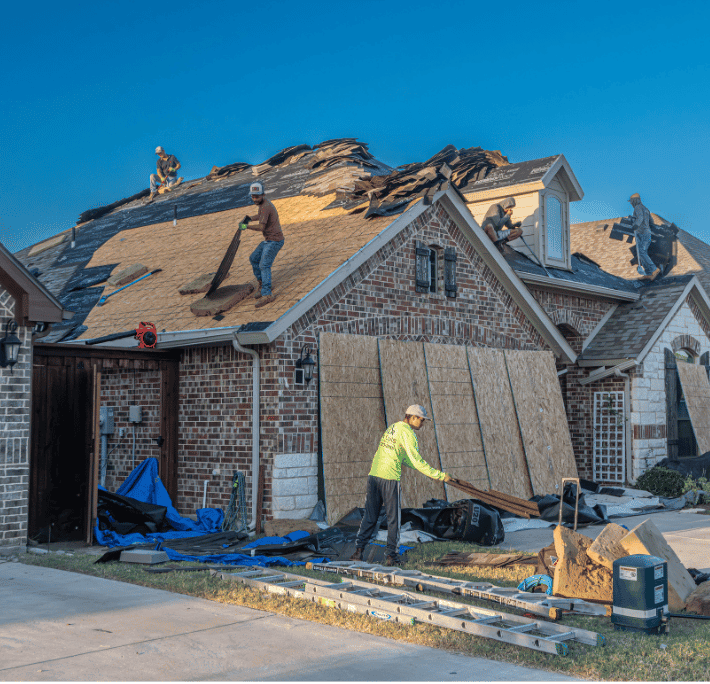
Roofing crew removing old shingles from the roof of a brick house under a clear blue sky

Only one of the four is open to investment properties. One caps the repair budget at a fixed dollar amount. One requires a HUD consultant and a draw schedule, and another runs on a simpler contractor bid. Switching loans after a contract is signed usually means a second appraisal and a new closing date.

A home you already own can qualify too, through a renovation refinance. A 1970s kitchen, a roof an insurer has declined to renew, a bathroom that has to be made accessible: that work can be financed against the home’s after-improved value instead of on a credit card or a second mortgage.

Bruce Woodburn, The Loan Arranger, and the Woodburn Team process and underwrite in-house, which matters more on a renovation loan than on most. The contractor bid, the after-improved appraisal and the draw schedule are all reviewed by the same underwriter. The first conversation settles which loan fits before an offer goes in, not after an appraisal comes back short. Call 407-869-8830 to start.

4.9 average review score across platforms

2026 Scotsman Guide Top Originator

10,000+ Families helped, since 1989

Top 1% Mortgage Lender, Central Florida | Orlando Magazine & Five Star Awards

5-Star Central Florida Reputation

This is custom heading element

A renovation loan finances the home and the work in one mortgage — one closing, one rate and one monthly payment, instead of a purchase loan plus a credit card, a personal loan or a second mortgage to cover repairs.

Loan Amount Is Based On After-Improved Value
What an appraiser says the house will be worth once the approved scope of work is complete. The renovation budget is not capped by what the home is worth in its current condition.
Funds Are Held In Escrow, Not Handed Over
The renovation money does not reach the borrower at closing. It is released to the contractor in draws as the work is completed and inspected.
Required On Every Program
A licensed contractor, a written bid, and a completion deadline. No program allows self-performed work to be financed as a substitute.
Where The Four Programs Differ
How detailed the bid has to be, whether a third-party consultant reviews it, how many draws are allowed, and how large the eligible scope can be.

What These Loans Typically Pay For In Central Florida

  • Roof replacement, including replacements driven by insurer non-renewal
  • Plumbing and electrical replacement in homes built before modern code
  • HVAC replacement and impact window or shutter installation
  • Kitchen and bathroom remodels, flooring, and interior finish work
  • Accessibility modifications — ramps, widened doorways, walk-in showers
  • Structural repair, foundation work and termite damage, on the programs that allow it

Luxury additions are treated differently by each program, and the line between an eligible improvement and an ineligible one is not the same across all four. That is a program-selection question, not a general one.

Why Older Orlando Homes Need Renovation Financing

Why This Comes Up Here

Central Florida’s established neighborhoods hold the inventory most buyers can still afford, and a large share of that housing stock predates current building code. The practical consequence shows up at the insurance binder rather than the inspection report: carriers decline or non-renew over roof age, a 4-point inspection flags aging plumbing or electrical, and the loan cannot close without coverage in force. A home that needs a roof is not a cosmetic problem in this market. It is a financing problem.

Why Paying For It Another Way Backfires

Paying cash for that work creates a second problem. Reserves are an underwriting factor, so draining savings to cover repairs can weaken the same file that has to qualify for the mortgage. Putting the work on credit cards raises the debt ratio the lender is measuring. Renovation financing keeps the repair cost inside the mortgage, at mortgage rates, and leaves reserves where the underwriter can count them.

Why The Timeline Has To Be In The Offer

The sequencing is what catches most buyers. The scope of work has to be defined and bid before closing, not after. That means a contractor walks the property during the inspection period, the bid is written to the program’s requirements, and the appraiser values the home against that scope. A renovation file is slower than a standard purchase for exactly this reason, and the timeline belongs in the offer — the contract should be written with a closing date the process can actually meet.

Bring the contractor in during the inspection period, not after the contract goes firm. That single move is the difference between a renovation file that closes on time and one that needs an extension.

Renovation Loan Options in Orlando

Four renovation programs are available to Orlando borrowers, and the differences between them are not cosmetic. Occupancy, scope limits and oversight requirements decide which one a given project can actually use.

FHA 203(k) vs. HomeStyle vs. VA vs. USDA Renovation

Program Comparison

FHA 203(k) Fannie Mae HomeStyle VA Renovation USDA Repair
Occupancy Allowed Primary residence only, 1–4 units Primary, second home, or 1-unit investment Primary residence only Primary residence only, in eligible areas
Structural Work Standard tier only Allowed Non-structural only No
Renovation Cost Limit Limited tier capped by dollar amount; Standard tier limited by FHA loan limits Tied to after-improved value Program and lender cap Narrow repair scope
Third-Party Consultant Required on Standard tier Not required Varies by lender Not required
Minimum Down Payment 3.5% 3% on primary residence; higher on second home and investment 0% with full entitlement 0%
Credit Requirement Agency floor, plus lender overlay Agency floor, plus lender overlay No agency minimum; lender sets it Agency floor, plus lender overlay

What Usually Decides It

  • An investment property or a second home rules out every program except HomeStyle. This is the single most common disqualifier and it is worth settling first.
  • Structural work rules out the lighter tiers. Moving load-bearing walls, foundation repair and room additions require 203(k) Standard or HomeStyle.
  • A veteran with full entitlement has the cheapest path of the four. That applies to a primary residence needing non-structural work, provided the scope stays inside the program’s limits.
  • A property in a USDA-eligible area outside the Orlando metro opens a zero-down option. Most borrowers never learn they qualified for it.
  • A modest, non-structural scope with the lightest paperwork is usually 203(k) Limited. That is the common landing spot for borrowers who want the process kept simple.

On credit: minimums are set by the agency, but every lender adds its own requirements on renovation files, and those run higher than the published floors. The number that matters is the one a lender will actually approve, not the one the guideline permits.

Bruce Woodburn originates renovation financing across these programs, which is what makes the comparison above a conversation rather than a referral. A lender that offers one of the four has one answer available regardless of the project.

Schedule Your Renovation Consultation

Types of Renovation Loans and How Each One Works

FHA 203(k) Renovation Loans

An FHA 203(k) loan comes in two versions:

– Limited 203(k): cosmetic and non-structural work, such as a kitchen, flooring or a new roof.
– Standard 203(k): structural work, such as moving load-bearing walls, foundation repair or a room addition. It adds a HUD consultant and a formal draw schedule.

The type of work decides the version first, then the budget. A kitchen remodel and a foundation repair at the same cost are not the same application.

It fits buyers and owners who will live in the home and want FHA’s lower down payment.

Dollar limits, consultant requirements, draw counts and the full list of eligible improvements are covered on the FHA 203(k) loan page →

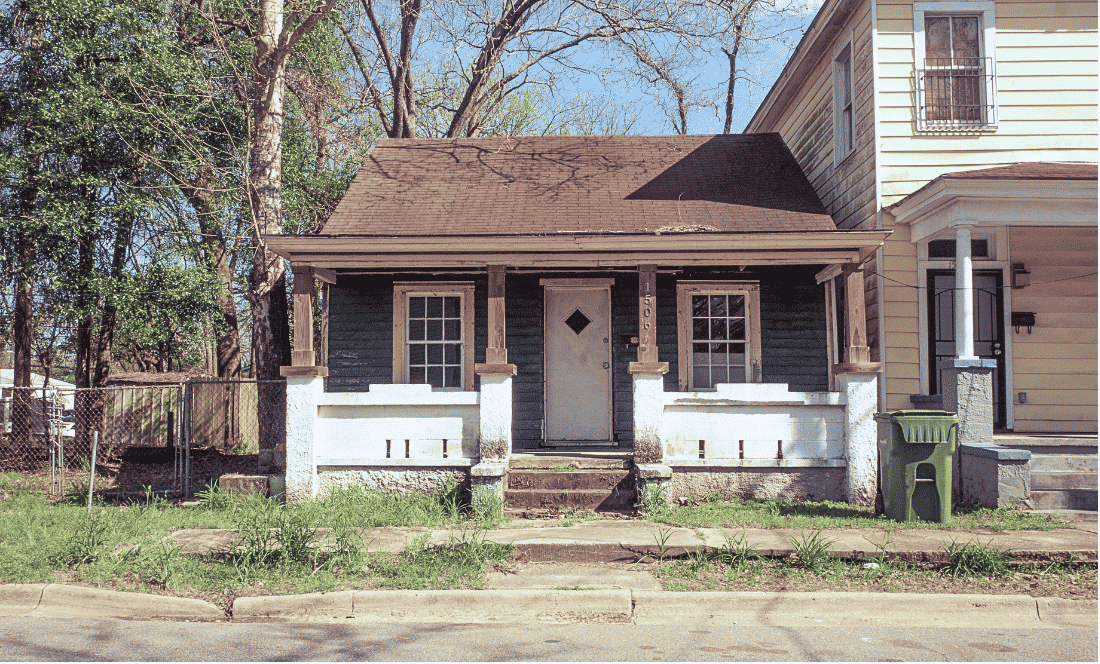
Small older bungalow with dark green siding, a worn front porch and weeds growing along the sidewalk

Fannie Mae HomeStyle Renovation Loans

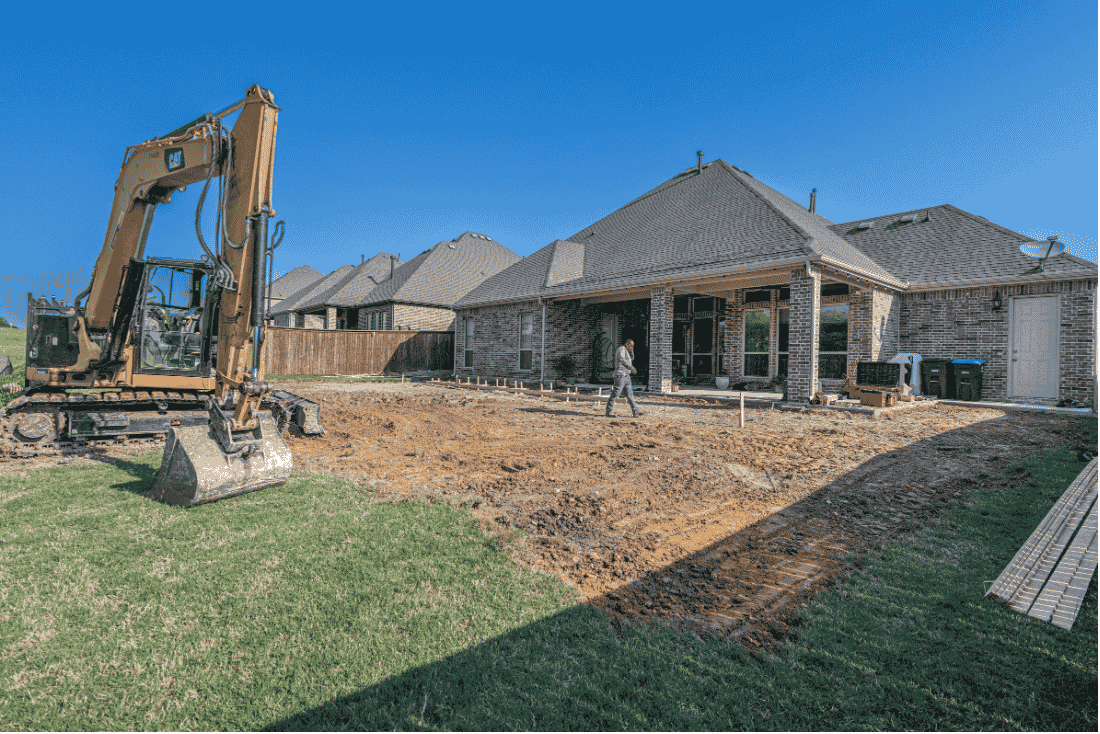
Excavator beside a cleared dirt area in the backyard of a single-story brick house, with a worker walking near the covered patio

A Fannie Mae HomeStyle Renovation loan is a conventional renovation loan, and the only one of the four that can finance a property the borrower will not live in.

HomeStyle is usually the answer when:

  • The property is a one-unit rental, a second home or a vacation property
  • The work is structural and the borrower wants to avoid a mandatory consultant
  • The plans include improvements FHA, VA and USDA loans exclude, such as a pool or a detached structure
  • The renovation budget is larger than a flat dollar cap allows
  • Credit and down payment are strong enough that FHA’s flexibility isn’t needed

What that flexibility costs:

  • The lowest down payment, as little as 3%, applies to a one-unit primary residence only
  • A second home requires more down, and an investment property more again
  • Investment properties are limited to one unit, so a duplex bought as a rental does not qualify, though a duplex bought to live in does

The renovation budget is tied to the home’s after-improved value, and the loan can run up to the conforming loan limit, which is higher than the FHA limit in the Orlando area.

VA Renovation Loans

A VA renovation loan, also called a VA alteration and repair loan, lets an eligible veteran or service member finance a home and its repairs in one VA loan. It is often the lowest-cost of the four: no down payment with full entitlement and no monthly mortgage insurance.

The trade-off is scope. VA renovation is built for repairs that make a home livable and sound, not for expansion. Structural work and additions generally fall outside it, and both the eligible work and the cost cap are set by the lender, not fixed by the VA.

VA renovation usually fits when:

  • A veteran is buying a primary residence that needs non-structural work
  • An older home would not meet the VA’s minimum property requirements as it stands
  • Insurance is the obstacle, and a roof or system replacement is what it takes to get a policy written
  • The borrower would rather finance the repairs than spend savings on them after closing

A veteran often has a choice between VA renovation and FHA 203(k). The answer turns on whether the work stays inside the VA loan’s limits. If it doesn’t, Standard 203(k) is usually next.

Eligibility, entitlement and the funding fee are covered on the VA loans page →

Older man in sunglasses with his hand raised to his brow outside a white stucco entry with a clay tile roof and an American flag flying above

USDA Renovation Loans

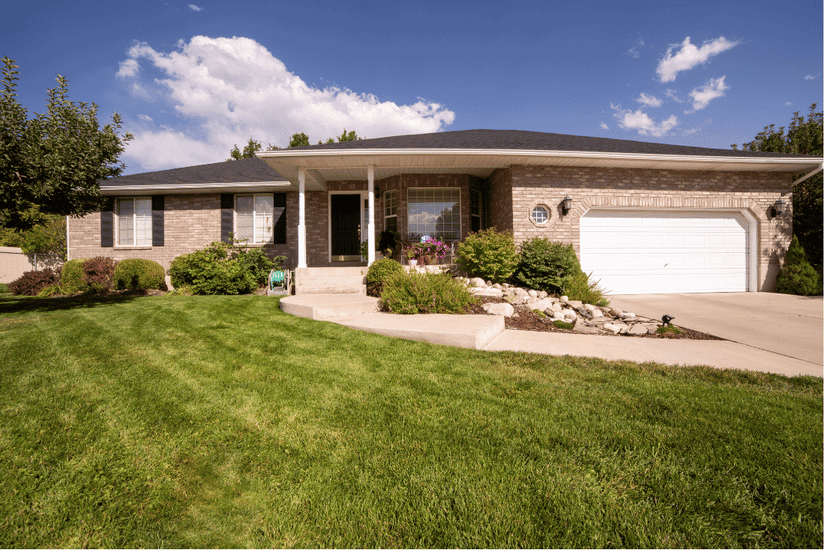
Single-story brick ranch house with a covered front porch, an attached garage and a large green front lawn under a blue sky

A USDA renovation loan lets a buyer finance a home in an eligible rural area and its repairs in one loan, with no down payment. It is the narrowest of the four, and the one buyers most often rule out without checking.

Eligibility starts with the map. Parts of Lake, Osceola, Polk and Volusia counties sit inside USDA boundaries, closer to Orlando than the word “rural” suggests. It is for a purchase only, on a home the buyer will live in, and household income has to fall inside USDA’s limits for the county.

  • Limited: smaller, non-structural repairs, such as a roof, systems or health and safety items.
  • Full: larger projects, including structural work, with a HUD consultant.

Worth checking USDA when:

  • The property sits outside the Orlando metro core, in any direction
  • The borrower’s income falls inside USDA’s household limits for the county
  • No down payment matters more than a wide choice of improvements

In place of conventional mortgage insurance, a USDA loan carries a guarantee fee. Boundaries are redrawn periodically, so a property that failed the test once may qualify now.

The eligibility map, income limits and guarantee fee are covered on the USDA loans page →

Renovating a Home You Already Own

Each of the four programs has a refinance version. The existing mortgage is paid off and the renovation budget is folded into a new loan, sized against the home’s after-improved value rather than its current one.

A Renovation Refinance Usually Makes Sense When

01

An insurer has declined to renew over roof age and the replacement has to happen before coverage lapses

02

The work is large enough that a credit card or personal loan would carry a materially higher rate

03

The homeowner has built equity that a standard cash-out refinance can’t reach at current value

04

The current rate is close enough to market that replacing it costs little

The Last Point Decides More Of These Than The First Three

A homeowner holding a rate well below today’s market may be better served by a home equity line on top of the existing mortgage than by refinancing it away — a question worth running before choosing a program.

Roof Age, Insurance and Renovating an Older Orlando Home

Most renovation files in Orlando start with an insurance problem, not a design one. Carriers decline or non-renew over roof age, and a 4-point inspection flags aging electrical, plumbing or HVAC. In this market, a home that needs a roof isn’t a cosmetic problem. It’s a financing problem.

The Order Matters

What Doesn’t Work

A renovation loan can’t close without a homeowners policy in force, so it doesn’t fix an insurance problem after the fact.

What Works

A carrier willing to bind coverage on condition that specific repairs are completed within a set window, with the renovation loan funding those repairs. Finding that carrier belongs at the start of the process, alongside the contractor bid — not after the appraisal.

Work That Most Often Clears The Insurance Hurdle

  • Roof replacement
  • Wind mitigation — impact windows or shutters, roof-to-wall connections, reinforced garage doorsDocumented on a wind mitigation inspection, these can also lower the premium.
  • Electrical panel and wiring replacement
  • Plumbing replacement, particularly older supply lines
  • HVAC replacement flagged on a 4-point inspection

Which program covers each depends on scope and occupancy. Structural items sit on the heavier tiers, and investment properties sit on HomeStyle alone — the comparison above shows where each line falls.

Paying cash for this work creates a second problem. Reserves are an underwriting factor, so draining savings on a roof can weaken the same file that has to qualify. Financing the work inside the loan keeps reserves where the underwriter can count them.

How to Get a Renovation Loan Started in Orlando

01

Talk Through The Property And The Project

Call [PRIMARY NUMBER] or start an application at WeBringYouHome.com. The first conversation covers the property, the scope of work, and the borrower’s qualifications — in that order, because the property usually rules programs out before the borrower does.

02

Match The Project To A Program

The renovation team runs the four programs against the specifics: occupancy, whether the work is structural, the size of the scope, and whether VA or USDA eligibility is in play.

Program selection happens before an offer goes in, not after. Switching programs mid-contract usually means a second appraisal and a renegotiated closing date.

03

Build The Contractor Scope

The file moves to the renovation department, which organizes the pieces standard purchase loans never require:

  • Contractor bids written to the selected program’s format
  • A scope-of-work document the appraiser will value against
  • A project timeline the contract’s closing date can accommodate
  • Contractor licensing and insurance verification
  • A HUD consultant, on 203(k) Standard files

This is where renovation files stall when the lender hasn’t done many. The paperwork is unfamiliar to most contractors, and a bid written the wrong way goes back for revision while the contract clock runs.

For the 203(k)-specific version of these steps, see the FHA 203(k) guide →

04

Close, Then Renovate

One closing, one set of fees. Renovation funds go into escrow rather than to the borrower, and release to the contractor in draws as inspections clear. Work typically begins within 30 days of closing.

The Tuesday Update

Every borrower under contract gets a written status report covering loan progress, renovation milestones and inspection timing — sent to the borrower, the Realtor, the listing agent and the contractor at the same time.

Why Work With The Woodburn Team on a Renovation Loan

Most Lenders

Originate one renovation product. When a lender carries one program, the recommendation follows what’s on the shelf rather than what the project needs.

The Woodburn Team

Originates all four, and renovation files go to a dedicated renovation department rather than to whoever is free — people who know what each program’s bid format, draw schedule and inspection sequence requires. Most originators don’t have one.

More on how the team works: Why the Woodburn Team →

Renovation Loan FAQs for Orlando Borrowers

What's the difference between FHA 203(k) and Fannie Mae HomeStyle?

Occupancy decides most files. FHA 203(k) is limited to primary residences, while HomeStyle also finances second homes and one-unit investment properties. The two also differ on how the renovation budget is sized, whether a consultant is required and how structural work is handled. Full 203(k) requirements are on the FHA 203(k) loan page.

Which renovation loan works for an investment property?

Of the four renovation loans covered here, only Fannie Mae HomeStyle. FHA 203(k), VA renovation and USDA repair financing are restricted to primary residences. HomeStyle’s investment eligibility stops at one unit, and the down payment is substantially higher than on a primary residence.

Does the VA offer a renovation loan?

Yes. Eligible veterans, active-duty service members and surviving spouses can buy and repair a primary residence with no down payment on full entitlement and no monthly mortgage insurance. It is built for repairs that make a home sound and livable, not for additions, and lenders set their own limits on scope and cost.

Do renovation loans in Orlando require a licensed contractor?

Yes. The work has to be done by a licensed, insured contractor, and both are verified as part of the file. The contractor is paid through inspection draws as milestones are completed, not upfront. Doing some of the work yourself is possible in limited cases with lender approval, but it rarely saves enough to justify the added paperwork.

Can a renovation loan refinance a home you already own in Florida?

Yes. FHA 203(k) and HomeStyle both have refinance versions: the existing mortgage is paid off and the renovation budget is folded into a new loan sized against the home’s after-improved value. A homeowner with a rate well below today’s market should first compare a second mortgage or home equity line on top of the existing loan.

How long does a renovation loan take to close?

Longer than a standard purchase, and the extra time comes at the start. The contractor’s bid and scope of work have to be complete before the appraisal is ordered, because the appraiser values the home against that scope. Write the offer with a closing date that allows for it.

What happens if the renovation costs more than the budget?

Every renovation loan holds back a contingency reserve for overruns and for problems found once work begins, which is common when a wall or roof is opened on an older Orlando home. If costs exceed the reserve, you cover the difference, because the loan amount is set at closing.

Can you live in the home during the renovation?

It depends on the scope. Cosmetic and system work often allows it; a project that takes out the kitchen, the only bathroom or the roof usually does not. Raise it in the first conversation, because paying rent elsewhere means carrying two housing costs during the work.

What happens if the contractor doesn't finish the work?

The money for unfinished work is still there. Contractors are paid only for completed, inspected work, so the remaining funds stay in escrow to finish the job. It still costs time: the completion deadline applies, and a replacement contractor has to be brought in and approved.

Still weighing the options? Bruce Woodburn and The Woodburn Team match renovation projects to the right program in a single consultation. Call 407-869-8830

CHOOSE YOUR PATH

Where Are You on Your Home Journey?

Pick your starting point and we will guide you along the right path.

Start Your Pre-Approval

Get a same-day pre-approval letter framework strategy tailored directly to your specific Central Florida purchase criteria.

Find the Right Mortgage

Whether you are shopping alternative loan types or evaluating conventional refinancing options to drop your current PMI, we can help.