
By Bruce Woodburn, The Loan Arranger | November 16, 2026
Is an Adjustable-Rate Mortgage in Florida Worth It Right Now?
Is an adjustable-rate mortgage in Florida worth it right now? I’ll be honest: as a general rule, I don’t love ARMs. But a couple of them deserve a real look right now, and for the right borrower they can save serious money. On this week’s Monday Mortgage Minute, my co-host Tom McNamara of eXp Realty and I covered a lot of ground: where mortgage rates really are, which ARMs I’m actually selling, who’s refinancing, why so many Central Florida sellers are cutting prices, and how counties are reacting to Amendment 3.
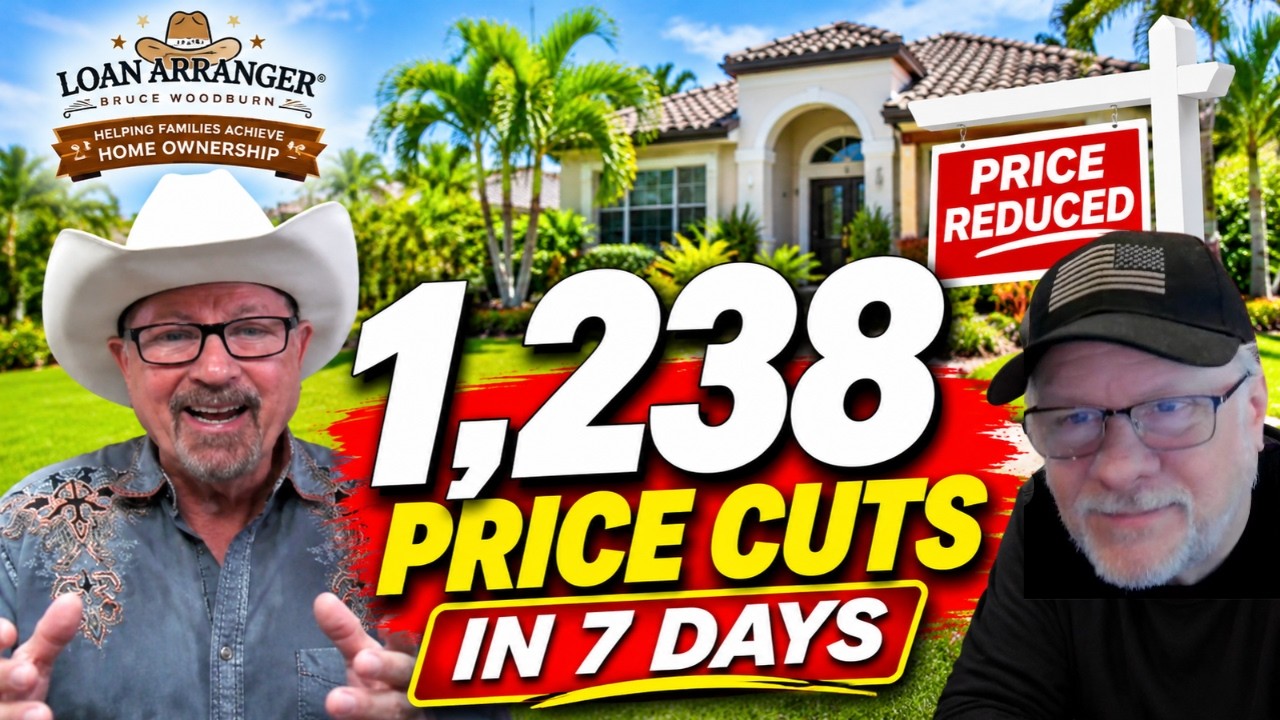
Watch: On this week’s Monday Mortgage Minute, Tom McNamara of eXp Realty and I cover the FHA 5-year ARM, the 10/1 ARM, why to lock your mortgage rate now, Central Florida price cuts and how Amendment 3 is hitting county budgets. Watch on YouTube
Mortgage rates this week: should you lock your rate now?
Freddie Mac’s weekly average for the 30-year fixed-rate mortgage came in at 7.11% on November 12, the fourth straight weekly drop, down from 7.40% in mid-October (Freddie Mac PMMS). That’s good news, but that number lags. It reflects applications from the days before, not what a lender is quoting this morning.
Then the bond market sold off hard in about three days, and since mortgage rates follow mortgage-backed securities, that pushes quotes back up. The real numbers I’m quoting are closer to 7.375% than 7.11%.
My advice: don’t play this market. If today’s rate gives you a payment you can live with, lock your mortgage rate and be done. If rates fall later, we can refinance. A rate you passed on, on the other hand, may not come back for a long time.
An adjustable-rate mortgage in Florida today isn't a 2008 loan
When people hear “ARM,” they think of the 2008 crash. I get it. Those loans left a bad taste in my mouth too. But the real problem back then wasn’t adjustable rates on their own. It was ARMs that adjusted every month and came with negative amortization: you could make a minimum payment that didn’t even cover the interest, so the balance grew. Lots of borrowers rode the interest-only payment, the house didn’t go up in value, the mortgage did, and families lost their homes.
Negative-amortization loans like that can’t be qualified mortgages under today’s federal lending rules, and they’ve all but vanished from the market. A modern ARM works differently:
01
A fixed-rate period up front
Your rate and payment don’t move for the first 5, 7 or 10 years.
02
Rate caps after that
When the rate starts adjusting, caps limit how much it can change at each adjustment and over the life of the loan.
03
You pay down principal from the first payment
No negative amortization.
The risk that remains is simple: once the fixed period ends, the rate can go up, and a higher payment can really hurt a family. That’s why an adjustable-rate mortgage in Florida only makes sense when you have a plan for the day the fixed period ends.
Right now, Fannie Mae and Freddie Mac aren’t really in tune with ARMs yet, and I haven’t seen VA pricing that makes their ARMs worth it. But two options stand out.
FHA 5/1 ARM and the FHA streamline refinance exit
FHA offers a 5-year ARM (a 5/1 ARM): the rate is fixed for five years, then adjusts once a year. What I’m seeing is pricing about 1% below the FHA 30-year fixed rate. On a typical loan that’s a real drop in your monthly payment.
What makes it work is the exit plan. If fixed rates improve during those five years, an FHA borrower can use the FHA streamline refinance, one of the simplest refinances there is. In most cases there’s no appraisal, no income or job verification, and the focus is on your payment history. Generally, you need to have made your recent payments on time, and the new loan has to give you a real benefit, like a lower payment or the move from an ARM into a fixed rate (HUD calls this the “net tangible benefit”).
A quick distinction, since it comes up a lot: VA has its own streamline refinance (the IRRRL). But the low-down-payment ARM-plus-streamline combo I’m describing is an FHA strategy right now.
If you’re a first-time buyer comparing programs, start with our FHA loans page.
The 10/1 ARM: a strong option for buyers putting 20% down
The ARM I’m most interested in right now is the 10/1 ARM. Your rate is fixed for 10 years, then it becomes adjustable. Ten years is a long time. Plenty of families move, upgrade or refinance well before then.
The 10/1 rates I’m seeing beat the 30-year fixed rate. Not by a full point, but by enough to be worth considering. The catch: right now that pricing is only available if you put 20% down on a conventional loan. It’s not available at 5% down.
That’s my frustration. If we’re going to fix affordability, we need better rates on low-down-payment programs, and the market isn’t there yet. Still, several of my higher-end clients locked in 10-year ARMs this year and they’re very happy with them.
ARM vs. 30-year fixed-rate mortgage
| FHA 5/1 ARM | 10/1 ARM | 30-year fixed | |
|---|---|---|---|
| Rate fixed for | 5 years | 10 years | 30 years |
| Down payment | FHA minimums | 20% down (current pricing) | Program minimums |
| Rate vs. 30-year fixed (what I’m seeing) | About 1% lower than FHA fixed | Lower, but less than 1% | Baseline |
| Exit plan | FHA streamline refinance | Sell or refinance before year 10 | None needed |
Is an adjustable-rate mortgage a good idea in 2026? For some buyers, yes. But we look at how long you plan to keep the home, your reserves and your worst-case payment before anyone signs anything. We’re not going back to 2008. We keep every family safe.
Debt consolidation refinance: who’s refinancing in 2026
Roughly 30% of the loans in the pipeline right now are refinances. But almost nobody is refinancing to drop their rate. Most are homeowners consolidating high-interest debt.
Here’s the math that matters. Say you have a 3.5% 30-year fixed mortgage you’d never want to give up, and you also have $60,000 in credit card debt at 28%. Factor in your cards and your real average cost of borrowing is probably 16% to 18%, not 3.5%. Don’t let a low mortgage rate keep you stuck paying 28%.
Option 2
Leaves your low first mortgage untouched and pays off the cards with a second lien.
Which one wins depends on your balance, your equity and how fast you can pay it back. We’ll run the numbers for both.
Golden handcuffs: should you give up a low rate to move?
A message for the move-up buyer: I know you don’t want to trade a 3% rate for 7.5%. But you can’t put your family second. If the kids have outgrown the house, or you’re retired in a two-story four-bedroom and haven’t been upstairs in four years, your home no longer fits your life.
Rates aren’t 18%. They’re not even 12%. They’re around 7.5%. Make the move that’s right for your family, and we’ll work on the rate later.
Central Florida housing market: price cuts are piling up
Tom brought numbers that showed up for the second week in a row. In the last seven days, about 1,238 Central Florida homes cut their price, close to the 1,280 the week before. That’s roughly 10% to 12% of active listings every week, and they’re mostly different homes each week. The average cut was about 3.3%, and 59% of the reduced listings had been on the market 60 days or longer.
Tom’s read, and I agree: sellers are still overpricing at first. The house sits, it takes a 3.3% cut, and then the next buyer asks for another 3% off on top of that.
Tom’s pricing strategy for sellers
1
Price off today’s market, not what the house might have sold for two or three years ago.
2
List slightly under what the house should sell for. Priced too high, buyers won’t even look. Priced just under, you get quick activity and sometimes competing offers that push the price up.
3
Aim to be under contract in a week or two. Once a listing goes stale and takes cuts, buyers smell blood.
Tom shared an example: buyers who put in an offer $50,000 under asking and asked the seller for 4% in concessions. They probably won’t get all of it, but they’ll get something, because that seller priced high. If it had been listed $25,000 lower, that offer would never have happened.
One lender note for buyers asking for concessions: seller contributions have limits. FHA generally caps them at 6%, and conventional loans with less than 10% down cap them at 3%. Check with us before you write a big concession into an offer.
Amendment 3 and property taxes: what Central Florida counties do next
Amendment 3 passed, and the counties are adjusting. The new homestead exemption on non-school property taxes rises to $150,000 in 2027 and $250,000 in 2028. Orange County expects to lose about $165 million in property tax revenue in the first year and about $275 million the year after.
Every county and city is reacting a little differently, and there are 67 counties and more than 400 cities to track.
3
Levers counties and cities will pull
01 Raise or add fees.
02 Raise millage rates (the tax rate applied to your taxable value).
03 Cut spending.
I think the smart ones lead with budget cuts. Go to residents and say, “We lost $165 million, we found $50 million in waste, now help us figure out the rest.” That’s working with taxpayers instead of piling everything back on them.
Meanwhile, Governor DeSantis wants a special session before he leaves office in January to pass a “taxpayer bill of rights” aimed at keeping local governments from replacing the lost revenue with new fees. Legislative leaders haven’t committed to a date yet. Some counties, like Hillsborough, are already moving to protect their ability to create fees.
The places I worry about most are Florida’s 29 fiscally constrained counties, mostly small rural ones. By my math, they lose about $188 million combined. That’s about what Orange County loses alone. Orange County can absorb its loss. Levy County can’t. A state backstop for those counties, which was proposed and dropped earlier, may come back as part of that special session.
What it means for your mortgage: a bigger homestead exemption lowers your taxable value, but your tax bill can still go up if your county raises its millage rate or adds fees. Since most Florida homeowners pay taxes through escrow, that change shows up in your monthly payment at your next escrow analysis. For the full breakdown, read last week’s post on the Florida Amendment 3 homestead exemption.
The bottom line on ARMs, rates and your escrow
Rates
Freddie Mac says 7.11%. Real-world quotes are closer to 7.375% after this week’s bond sell-off. If the payment works, lock it.
ARMs
The FHA 5-year ARM (with a streamline refinance exit) and the 10/1 ARM with 20% down are worth a conversation. Most other ARMs aren’t there yet.
Prices
Central Florida prices have come down about 3% through cuts, which gives buyers room to negotiate.
Taxes
Counties will have to tighten their budgets to absorb the new homestead exemption, and how they do it will affect your escrow.
Frequently asked questions
Is an adjustable-rate mortgage a good idea in 2026?
It can be, for the right buyer. An ARM makes the most sense when the starting rate is meaningfully lower than the 30-year fixed rate and you have a clear plan for when the fixed period ends, such as selling, or refinancing with a tool like the FHA streamline refinance. If you plan to stay in the home for decades and the payment difference is small, a fixed rate is usually the safer choice.
Can you refinance an FHA ARM with a streamline refinance?
Yes. If you have an FHA 5-year ARM, you can generally use an FHA streamline refinance to move into a fixed rate if rates improve. In most cases there’s no appraisal and no income verification. You need an on-time recent payment history, and the new loan must give you a net tangible benefit, such as a lower payment or a switch from an adjustable rate to a fixed rate.
Why do some 10/1 ARMs require 20% down?
That’s how lenders are pricing them right now. The best 10/1 ARM rates are reserved for conventional borrowers putting at least 20% down. Low-down-payment buyers don’t have a comparable ARM option yet, so a fixed-rate loan is usually the better fit for them.
Should I lock my mortgage rate now or wait?
In a market this volatile, if today’s rate gives you a payment you’re comfortable with, locking is usually the safer move. Rates can jump in a matter of days when the bond market sells off. If rates fall meaningfully later, you may be able to refinance.
Does Amendment 3 mean my mortgage payment will go down?
Not necessarily. The larger homestead exemption lowers the taxable value of a primary residence for non-school taxes, but counties and cities can still raise millage rates or add fees. If you pay property taxes through escrow, any change shows up in your payment after your servicer’s next escrow analysis.