
Here is the thing that keeps people up at night when building a custom home in Central Florida: a half-finished house. The slab is poured, the framing is up, and then something goes sideways. The builder stops answering, the draw schedule stalls, or you finish building only to realize you have to re-qualify for a brand-new mortgage at higher interest rates, with a new credit pull and a second set of closing costs.
Orlando Construction-to-Permanent Loans: Build with One Loan Instead of Two
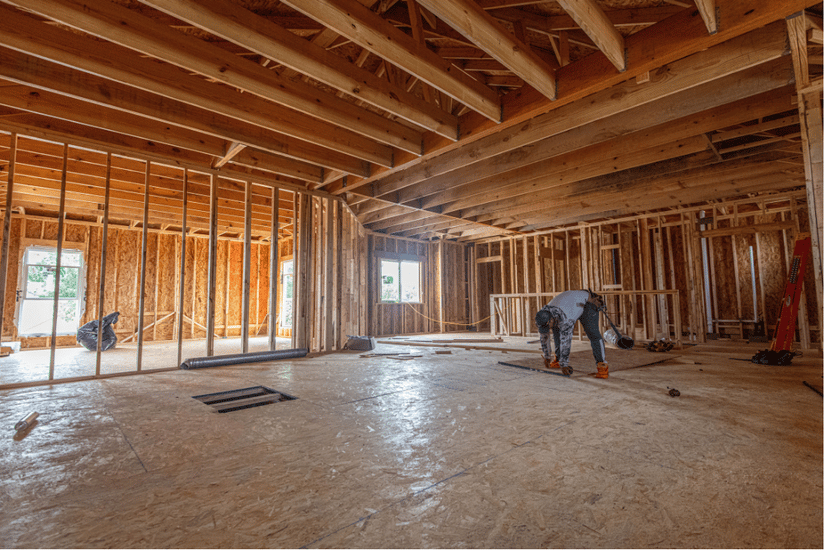
That nightmare happens when a construction loan and a permanent mortgage are treated as two separate transactions. A single-close construction-to-permanent loan solves this entirely:
One Closing
You sign papers once before ground is broken, eliminating double closing costs and duplicate underwriting fees.
Protected Rate
Your long-term mortgage interest rate is secured upfront, shielding you from market spikes during the build.
Interest-Only
During construction, you pay interest only on the funds disbursed to the builder in draws.
Seamless Conversion
Once the certificate of occupancy is issued, the loan automatically converts to your permanent mortgage without re-qualifying.
Planning a build? Call us at 407-869-8830 before you sign a builder contract so we can structure your financing correctly from day one.

What Is a Construction-to-Permanent Loan?
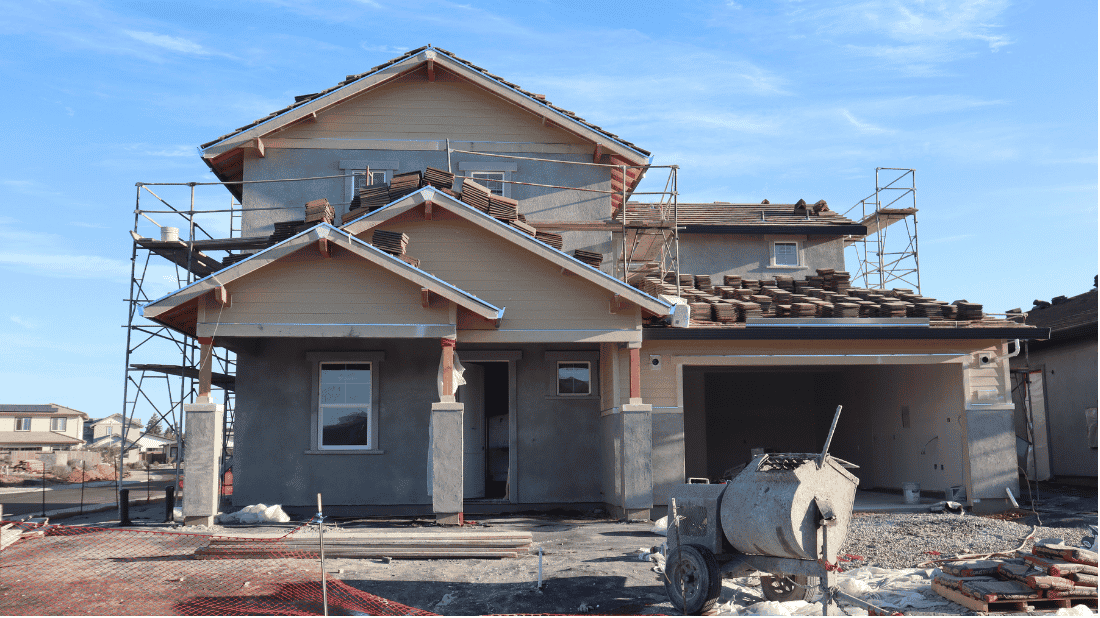
A construction-to-permanent loan, also called a one-time close or single-close construction loan, is one loan that finances the lot and the build, then becomes the long-term mortgage. There is one closing up front, interest-only payments while the house goes up, and an automatic conversion to a permanent mortgage once the certificate of occupancy is issued.
Without it, building a custom home in Central Florida can take as many as three separate loans:
– A lot loan to buy the land
– A construction loan to fund the build
– A mortgage to pay off the construction loan when the house is finished
Lenders call the last two steps a two-time close. Each loan brings its own application, approval and closing costs, with a gap in the middle where rates can rise or an approval can fall through.
A one-time close replaces all of that. You qualify before construction starts, and the builder is paid on a draw schedule as each stage is completed and inspected.
Build the home you want, on the land you love. Because approval happens before the build, the interest rate on the permanent mortgage can be locked at the start instead of being set nine months later by whatever the market is doing.
A construction-to-permanent loan, also called a one-time close or single-close loan, finances the build and the finished home with one loan and one closing. You qualify before construction starts, the builder is paid in draws as each stage is completed, and when the home passes final inspection the loan converts to a permanent mortgage.
Build the home you want, on the land you love. Because approval happens before the build, the interest rate on the permanent mortgage can be locked at the start instead of being set nine months later by whatever the market is doing.

Construction Loan vs. Construction-to-Permanent Loan: One Closing or Two?
A one-time close means one application, one set of closing costs, and no requalifying when construction ends. A two-time close means financing the build first, then refinancing into a permanent mortgage later — a second underwrite, a second appraisal, a second set of fees, and whatever interest rates exist on that day.
| Construction-to-Permanent One-Time Close |
Construction Loan + Refi Two-Time Close |
Builder’s Lender In-House Financing |
|
| Closings | One, before ground breaks | Two | Usually one, on the builder’s terms |
| Closing Costs | Paid once | Paid twice | Paid once, often rolled into the price |
| Requalify at the End? | No | Yes — new credit, income, and appraisal | Varies by builder |
| Permanent Rate | Locked up front, extended locks to 360 days | Whatever the market gives you at the end | Often tied to using their preferred lender |
| Payments During Build | Interest-only options available | Interest-only, then a new mortgage payment | Varies |
| If the Build Runs Long | Managed inside one file | Rate-change and requalification risk | Depends on the contract |
| Who Picks the Lender? | You do | You do | The builder does |
Terms vary by program and borrower. This table is a general comparison, not an offer of credit
The short version: the two-time close puts the rate, the appraisal, and the approval back on the table at the exact moment a borrower has the least leverage — after the money is already spent.
Which Path Fits
- ■Borrowers building from the ground up on their own lot — a one-time close removes the second approval and holds the permanent rate through the build.
- ■Borrowers whose income or credit may change mid-build — a self-employed year, a job change, or a new debt can sink a second underwrite that a one-time close never requires.
- ■Borrowers on a long or custom timeline — extended locks cover builds that a standard construction loan would outrun.
- ■Borrowers offered builder financing — the incentives are real, but the rate, the lender, and the terms belong to the builder. Worth pricing against an independent one-time close before signing.
- ■Borrowers who already own the land outright — lot equity often counts toward the down payment, which changes the cash-to-close math on every option above.
A lot of folks assume the builder’s preferred lender is automatically the best deal, that’s what the incentive is for. Sometimes it is. Sometimes those incentives are real money and worth taking. But you’ll never know unless somebody runs the numbers side by side.
We’re the approved lender for many Florida builders, so I’m not here to tell you that builder financing is a scam. I’m telling you to get two sets of numbers and compare them. That’s it. That’s the whole warning. Smart buyers compare; everybody else just signs.
How Central Florida Build Costs Shape Your Construction Loan
Build costs shape the loan before they shape the house. Four line items decide how much gets financed, how much has to be cash at closing, and how long the rate lock needs to run.
Impact fees
Due at permitting, before a single stud goes up. Whether they can sit inside the loan amount or have to come from cash at closing depends on how the builder’s contract sequences them. Bring the fee schedule to the application, not to the closing table.
Florida wind-code construction
Impact-rated openings and reinforced framing are the baseline here, not upgrades. That cost lands in the total build budget, which means the as-completed appraisal has to support it. Reviewing the spec sheet before the appraisal is ordered is what prevents a value gap surfacing late, when there is no cheap way to solve it.
Insurance during the build
Coverage has to be in force before the first draw is released and stay in force through the last one. Which policy type prices best is a conversation for an insurance agent — and worth having early, because the options are not priced the same way. The lender’s requirement is simply that coverage never lapses mid-build.
Timelines and the trades
Schedules slip. The loan term and the rate lock have to be written with room for that, because a lock expiring before the certificate of occupancy is what turns a one-time close into a two-time close in practice.
Working the numbers? The full cost breakdown — impact fee schedules by municipality, the wind-code premium, land pricing, and where the labor market sits — is in what it costs to build a house in Orlando and Central Florida. Bring those figures to a loan consultation and they become a structure, not a spreadsheet.
1
Plans and specs have to be final
Not near-final, not pending one more meeting with the builder. An appraiser working from an incomplete set either values the wrong house or returns the file, and both cost weeks.
2
Allowances have to be real numbers
A placeholder figure for flooring or fixtures is a gap in the valuation and a gap in your budget. Allowances set low to make a contract look competitive surface later as cash you have to bring.
3
The contract has to match the drawings
Where the builder’s contract and the plan set disagree, underwriting has to resolve it before anything moves. The disagreements are usually small and almost always found late.
4
The draw schedule has to be agreed up front
Draws are released against completed stages, inspected as they go. A schedule that does not match how the builder actually sequences the work creates friction on every single release.
Where Local Matters
Incomplete plans and specs are the most common reason we see a construction file stall. Because we lend across Central Florida and the Tampa Bay market, we know which builders, which packets, and which county processes create the gaps — and we catch them before an appraisal is ordered, rather than at week six.
How Construction Loan Draws Work in Florida
You never receive a check. Your builder is paid in stages called draws, and each one is released only after an inspector confirms the work is actually finished. Nobody gets paid for work that has not happened, which protects your money as much as ours.
01
The builder requests
A stage finishes and the builder submits a request against the schedule agreed at closing.
02
An inspector verifies
Someone goes and looks. The work has to match what was claimed before anything moves.
03
Funds release
The draw funds and the next stage begins. The cycle repeats through completion.
Ask Every Lender This
“Who manages my draws, and where do they sit?”
This is the part of construction lending where lenders either shine or disappear, and most borrowers never think to ask about it. Draw administration here is handled by our own construction department — in the same building as the people who underwrote the file. Not a third-party servicer. Not an outsourced draw desk. When a builder needs a draw released so the trusses can go up Thursday, there is someone here who can look at it Thursday. An automated queue cannot call an inspector or explain to a builder why a draw came back short. That is people work, and it is staffed accordingly.
Worth Knowing Before You Start
✓
Interest on drawn funds only: you pay on what has actually been released, not on the full loan amount from day one, so carrying cost climbs with the build instead of landing all at once.
✓
Upgrade contingencies: allowed and encouraged. You are going to change your mind about the kitchen — everybody does. A cushion built in on the front end is far easier than scrambling for cash at trim-out.
✓
Draw schedules are set before closing: not negotiated mid-build. Matching the schedule to how your builder actually sequences work is what keeps every later release from becoming a conversation.
✓
Program and occupancy shape the structure: which programs fit your build, and how the draw schedule is written for each, is settled at consultation before anything is ordered.
How to Get Started on Your Construction-to-Permanent Loan
Step One
Start with a Build Plan Session
Call 407-368-8830 for a personalized meeting with Bruce Woodburn, The Loan Arranger. Bruce and his team will walk through your lot, your builder, and your budget. It is free, and no application is required to have the conversation. Prefer to get moving? Start online and we pick it up from there.
▼
Step Two
Get fully underwritten, not just prequalified
Send the documents we ask for and the team turns a full pre-approval on a four-hour commitment — so you know your real number before you commit to a builder. A budget conversation with a builder is only useful if the number behind it is real.
▼
Step Three · Construction Only
Send the builder package
Contract, plans, specs, allowances, budget breakdown, license and insurance. This is the step that separates a build that closes from a build that stalls, and it gets reviewed before anything is ordered.
▼
Step Four · Construction Only
Appraisal and insurance setup
A local appraiser values the finished home from your plans, and construction-period coverage gets lined up at the same time, so nothing waits on an insurance binder.
▼
Step Five · Ground Breaks
One closing — then we manage the build with you
You close once, before ground breaks. From there the construction department handles draws and inspections while you get a written update every Tuesday. When the certificate of occupancy is issued, the loan converts to permanent financing.
Selling your current home to fund the build?
Ask about the TLA Real Estate Rebate Program — it can put part of the agent’s commission back in your pocket at closing, which is money that goes into the build instead.
Why Orlando Home Builders Call Bruce Woodburn for Construction Loans.
Why Builders Call
Construction lending is the product where the lender’s own operation decides how the build goes.
Not the rate sheet. The people, the appraisers, and the department releasing the money — and whether any of them are reachable on a Thursday.
◆
Builder familiarity
Enough volume has closed with Central Florida production and custom builders that we know what their contracts look like, how their draw schedules are structured, and where their timelines typically slip. See the builders we work with.
◆
Appraisers who know the market
We run our own appraisal management company, staffed with appraisers who know Central Florida. Valuing a house that does not exist yet is a judgment call, and judgment requires knowing the market it is being made in.
◆
Tuesday Updates
You, your builder and your agent get a written update every Tuesday on exactly where the loan stands. On a nine-month build with draw inspections, insurance binders, permit approvals and a rate lock ticking, it is how nothing falls in a crack.
◆
Builders on the record
Bruce Woodburn has hosted Central Florida builders on Loan Arranger Radio — WDBO 107.3 FM / 580 AM and 102.5 The Bone in Tampa — walking listeners through land due diligence and how construction-to-permanent financing actually works.
And what we will not promise: we control the loan — approving it, closing it, administering the draws. We do not control your builder’s schedule, the county’s permit queue, or the weather. Anybody promising a guaranteed build timeline is selling you something.
Common Questions About Construction-to-Permanent Loans in Orlando
Can land you already own count as the down payment on a construction loan?
Often, yes. Equity in a lot you already own can typically count toward the required down payment or reduce the cash brought to closing. How much depends on how long you have owned it, what you paid, and what it appraises for today. Bring us the deed and we will run it.
What happens if the appraisal comes in below the cost to build?
It becomes a gap to solve, usually by revising the scope with the builder, bringing additional cash, or applying more lot equity. That is why the plans, specs and allowances are reviewed before the appraisal is ordered, when a gap still has options.
Can you make changes once construction starts?
Yes, and almost every build has them. What matters is how they are funded. A change order that fits inside the contingency is straightforward. One that exceeds the approved budget has to be resolved before it affects the draw schedule, and that usually means cash from you, not more loan.
What happens to a current mortgage during the build?
You keep paying it. That means carrying the existing housing payment and the construction interest at the same time, and qualifying has to account for both unless the current home sells first. Sequencing those two events is one of the first things we work through, because it sets how much house you can build.
Can you be your own general contractor on a construction loan in Florida?
Generally no. A construction-to-permanent loan requires a licensed, approved builder. That requirement is what protects the draw structure and the appraisal.
What credit score is needed for a construction-to-permanent loan in Orlando?
The minimum follows the type of loan behind the build, and construction loans often call for a higher score than a standard purchase. Call 407-869-8830 and we will tell you where you stand in one conversation.
What happens if the build runs past its schedule?
The loan stays in place, with no second approval and no second closing. Every construction loan has a set build period, and a build that runs past it needs an extension, which can carry a cost. A slipping timeline has more solutions early, which is why we watch the file through the build.
Does this work for a second home or an investment property?
A primary residence is the standard case. Second homes and investment properties depend on the type of loan, so occupancy is one of the first questions we settle, because it decides which loan fits and how the file is structured.
CHOOSE YOUR PATH
Where Are You on Your Home Journey?
Pick your starting point and we will guide you along the right path.
Start Your Pre-Approval
Get a same-day pre-approval letter framework strategy tailored directly to your specific Central Florida purchase criteria.
Find the Right Mortgage
Whether you are shopping alternative loan types or evaluating conventional refinancing options to drop your current PMI, we can help.